
Contents
How to Start a Blog That Earns Money Without Losing Your Mind
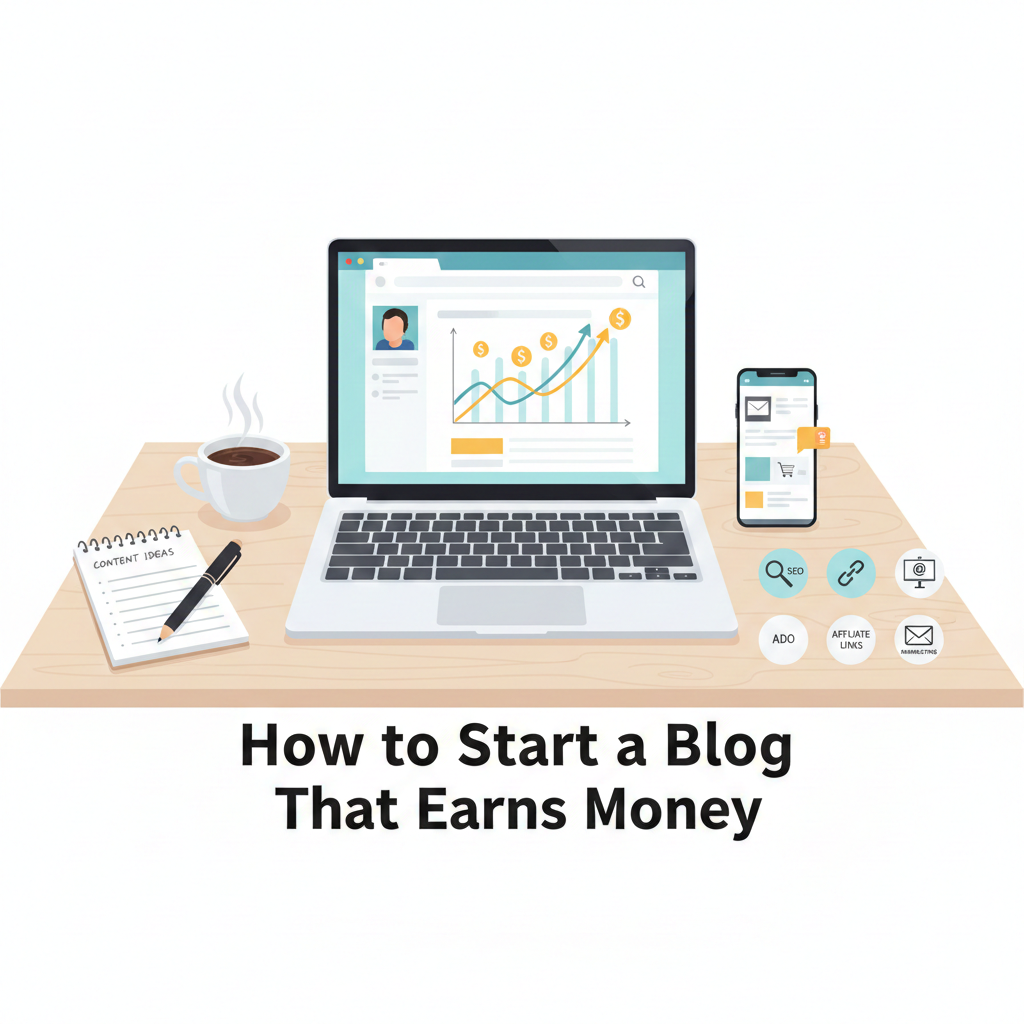
You’ve probably read the flashy headlines: “I Quit My Job and Now Make $10,000 a Month Blogging!”
Cue eye-roll, right?
Here’s the truth: you can start a blog that earns money, but it’s less about lottery-luck and more about stacking small, smart wins until the cash starts to flow. I’ve done it—twice—and I’ll walk you through the messy middle so you skip the sleepless nights I spent Googling “why is no one reading my posts?”
Grab coffee, silence notifications, and let’s turn that idea swirling in your head into a paycheck.
Why Most “Blog for Money” Advice Fails Newbies
Most tutorials jump straight to “pick a niche” and “install WordPress.”
That’s like telling someone who wants to open a restaurant, “Just buy a stove.”
You need the right recipe before you shop for appliances.
The missing ingredient? Understanding searcher intent and monetization before you write a single paragraph.
If you don’t know how your blog will make money, you’ll crank out 200 posts and wonder why AdSense is paying you 37 cents a day.
Step 1: Discover the Sweet Spot Between Passion, Profit, and Problem-Solving
Passion vs. Profit—The Marriage That Actually Lasts
You don’t have to blog about “personal finance” just because it pays well.
You do need a topic that hits three boxes:
- You can talk about it for 50+ posts without hating life.
- Readers actively spend money in this space (think hobbies, pain points, or obsessions).
- You can solve a specific problem better, faster, or with a fresh angle.
Example:
I love cheap travel. I’m also allergic to spreadsheets. My blog “Backpack Budget” helped college kids plan spring-break trips under $500 using color-coded Google Maps instead of Excel.
Small niche? Yep. But hotels, rail passes, and hostels paid me commissions because my readers actually booked.
Profit followed passion because I tied both to a clear problem.
Quick Validation Hack—The 15-Minute Market Test
- Type your topic into Google.
- Count how many ads show up. Ads = money changing hands.
- Scroll to “People also ask.” If at least three questions sound like things you’d enjoy answering, you’re gold.
- Check affiliate networks (ShareASale, Impact, Amazon) for at least five products you could naturally recommend.
No products? No paycheck. Pivot.
Step 2: Set Up Your Blog Like a Pro (Even If You’re Technophobic)
H3: Domain Name—Cute or Keyword-Rich?
Both work, but clarity beats cleverness when you’re starting.
If you’re stuck, mash a problem-solving phrase with your name:
“PodcastGearwithPam.com” or “QuickKetoWithJon.com.”
Instant trust, plus you’re the brand if you ever pivot.
Hosting—The $3 Mug That Holds Your Coffee
You wouldn’t sip latte from a colander; don’t host your money-making blog on free platforms that plaster ugly banners on your labor.
I’ve used SiteGround and BigScoots; both have one-click WordPress, 24-hour chat support, and free SSL (the little padlock that keeps Google happy).
Grab the cheapest plan; upgrade later when Oprah features you.
WordPress Themes—Pick Speed Over Sexy
Astra, GeneratePress, or Kadence are lightweight, free, and mobile-ready.
Add these plug-ins and stop:
- RankMath (SEO)
- WP Rocket or LiteSpeed Cache (speed)
- ShortPixel (image compression)
- Pretty Links (cloak ugly affiliate URLs)
Delete everything else or your site will load slower than a 1999 modem.
Step 3: Create Content Google Loves and Readers Devour
The Alphabet Soup Method for Endless Post Ideas
Open Google. Type your broad topic plus every letter:
“Best travel a…”
“Best travel b…”
Autosuggest hands you real questions people type.
Drop the best into a spreadsheet; you now have 26 post ideas in under five minutes.
Write Pillar Posts First—Your Traffic Pillions
Pillar posts are 2,000-plus-word, uber-complete guides that answer the core question.
Examples:
- “How to Backpack Europe for Under $30 a Day (2025 Route Planner)”
- “Keto for Diabetics: 14-Day Meal Plan Backed by Science”
Internal-link smaller posts back to these pillars; Google sees you as the authority, readers see you as the encyclopedia.
Use the “Inverted Pyramid” Journalist Trick
Start with the answer, then explain.
Example:
“Yes, you can carry peanut butter through TSA—if it’s under 3.4 oz and in a clear bag. Here’s why agents confiscate jars anyway…”
Readers get the quick win, stay for the story, and Google notices low bounce rates.
Multimedia Without Meltdown
Add one vertical image optimized for Pinterest (735×1102 px) and one horizontal for Facebook/Twitter.
Canva templates make this a 10-minute drag-and-drop job.
Rename the file with your keyword before uploading: “how-to-start-a-blog-that-earns-money-infographic.png” helps you sneak into Google Images.
Step 4: Monetize Early, Monetize Ethically
Affiliate Marketing—The Low-Hanging Fruit
Recommend products you already use, pop your special link, earn 4–50%.
Best practice:
- Show the product in action (screenshots, photos, video).
- Share what almost went wrong.
- Offer a bonus (template, checklist) if they buy through you.
Suddenly you’re not “selling”; you’re helping.
Display Ads—The Slow but Steady Drip
Apply to Mediavine or Raptive once you hit 50,000 sessions a month.
Before that, use Google AdSense but limit ads to footer and sidebar; user experience still matters.
Digital Products—Where the Real Money Hides
eBooks, printables, or mini-courses cost zero inventory and scale infinitely.
Example: A food blogger’s “30-Minute Weeknight Keto Cookbook” sold at $19 makes more than Amazon commissions pushing $1.99 cans of tuna.
Start small: turn your most popular post into a Google Doc, add pretty fonts on Canva, export to PDF, sell via Gumroad.
Services—Cashflow While You Wait for Traffic
Offer freelance writing, coaching, or done-for-you templates in your niche.
Post a “Work with Me” page with clear packages.
My first $500 month came from formatting other people’s blog posts—not affiliate sales—while my traffic was under 2,000 page views.
Step 5: Drive Traffic Without Buying Sketchy Bot Clicks
Pinterest—The Visual Search Engine Everyone Ignores
Pins last for months, sometimes years.
Use Tailwind to schedule 15 fresh pins daily.
Focus on problem-solving headlines:
“7 Carry-On Items That Save $150 in Airline Fees” outperforms generic “My Travel Essentials.”
SEO—The Snowball That Never Stops
Target long-tail keywords first.
KD (Keyword Difficulty) under 20 in tools like Ubersuggest or LowFruits.
Write the best answer on the internet; ask friends to share and link.
One quality backlink beats 50 comment-spam links.
Email List—Your Insurance Policy Against Algorithm Updates
Offer a juicy freebie:
“Pack-List PDF + $25 Airbnb Coupon Link.”
Use ConvertKit or MailerLite; both free under 1,000 subs.
Send one helpful email weekly.
When you launch an eBook, 5% of your list buying can out-earn three months of ad revenue.
Step 6: Track, Tweak, and Scale
Metrics That Matter (Ignore Vanity)
- Organic clicks (Google Search Console)
- Affiliate conversion rate (share of clicks that purchase)
- Revenue per visitor (total income ÷ total sessions)
If RPM (revenue per mille) is under $5, improve content targeting or upgrade offers.
Repurpose Winners—The Content Multiplication Trick
Turn your top post into:
- YouTube video (ad income + backlinks)
- TikTok clip (affiliate link in bio)
- Instagram carousel (drive to post)
- Email series (nurture sequence)
Each platform feeds the others; traffic snowballs while you sleep.
Outsource Before You Burn Out
Hire a VA for $5–$10 an hour to format posts, create Pins, or answer comments once income hits $500/month.
Reinvest 30% back into the blog: better hosting, premium tools, or an editor.
Your future self (and sanity) will thank you.
Real-Life Timeline—What Money Looks Like Month by Month
Month 1: 5 posts, 200 page views, $0 (set up)
Month 3: 20 posts, 5,000 page views, $25 (affiliate)
Month 6: 45 posts, 30,000 page views, $350 (affiliate + ads)
Month 12: 80 posts, 120,000 page views, $1,800 (mix of ads, affiliates, eBook)
Month 18: 120 posts, 250,000 page views, $4,500 (added course)
Results vary, but consistency beats talent every time.
Common Roadblocks and How to Dodge Them
- “I have no time.” Batch content on Sunday afternoons; schedule posts and Pins for the week.
- “I’m not an expert.” Document as you learn; beginners trust beginners who are one step ahead.
- “I hate writing.” Record voice memos, transcribe with Otter.ai, clean it up—done.
- “It’s too saturated.” Niche down until you can serve a micro-audience better than giants. Example: “Vegan bodybuilding on $50 a week” vs. general vegan blog.
Frequently Asked Questions
How much does it cost to start a blog that earns money?
Roughly $50–$75 for the first year: $12 domain + ~$36 hosting + free WordPress theme. Optional: $20 Canva Pro, $10 premium plug-ins. You can bootstrap everything else.
How long before a blog makes $500 a month?
With 2–3 quality posts weekly and smart keyword targeting, expect 6–9 months. Pinterest can accelerate to 4–6 months if pins go viral.
Do I need to be a tech wizard?
Nope. If you can open Gmail, you can click “one-click WordPress install” and follow YouTube tutorials.
Can I use free platforms like Medium or Blogger?
You can, but you don’t own the real estate. Algorithms change, accounts get suspended. Self-hosted WordPress is an asset you control and sell later.
Which niche is most profitable?
Finance, software, and health pay the highest RPMs. But smaller passionate niches—hobbies, pets, productivity—can outperform if audience buys high-ticket items (drones, 3D printers, online courses).
How many posts should I write before launching?
Publish 5 stellar posts, then launch. You’ll look active to early visitors and Google. Momentum beats perfection.
Conclusion—Your First Dollar Starts Today, Not “Someday”
Starting a blog that earns money isn’t a mystical art locked behind coding degrees or influencer fame. It’s a simple, repeatable recipe: pick a problem people will pay to solve, create the best answer on the internet, place smart monetization doors in front of eager readers, and invite them in with traffic tactics that actually work.
Your first $1 online is the hardest; after that, you’ve proven the system and can scale from latte money to rent money, to “let’s-book-a-flight-to-Thailand” money.
Open a new tab. Buy that domain before overthinking talks you out of it.
Your future self is already typing the thank-you comment on the post that changed everything—written by you.