
Contents
At a Glance
- Topic: Call center software for small business
- Intent: practical research and next-step planning
- Verify: Use this as a practical starting point, then verify important details with current authoritative sources.
- Related entities: call, center, software, small, business
Last updated: August 23, 2026
Best for: Best for readers who want a clear overview, practical checks, and next steps on this topic.
Editorial note: This guide may use AI-assisted drafting, but it is organized and reviewed by the Bdtechsupport editorial workflow for clarity, search intent, and practical usefulness.
Call Center Software for Small Business: The Ultimate 2026 Buyer’s Guide
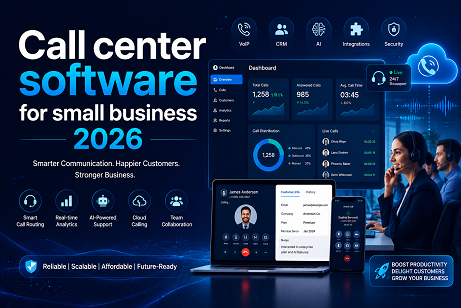
Why Your Small Business Needs More Than Just a Cell Phone
In my experience, almost every small business owner starts the exact same way. You hand out your personal cell phone number to clients, or perhaps you hook up a basic copper landline in the back office. It works perfectly fine when you are handling ten or twenty calls a week. But what happens when you start getting fifty calls a day? Customers begin getting annoyed by constant voicemails, your staff gets frustrated trying to pass a single phone around the room, and you start losing critical revenue because promising leads are slipping through the cracks.
What most people do not realize is that upgrading to a dedicated small business phone system is no longer a massive, expensive enterprise project requiring a server room. Today, cloud call center software has completely leveled the playing field. You can run an entire customer support and sales department from a laptop or a mobile app, with absolutely no heavy hardware required. Making this transition is the quickest way to make a three-person startup look and operate like a Fortune 500 company.
Decoding the Terminology: What Are You Actually Buying?
Before we dive into the best platforms available, let us clear up some of the heavy industry jargon. When I first started consulting on telecommunications systems, the sheer number of acronyms was overwhelming. Here is what you actually need to know about contact center software 2026.
Inbound Call Center Software
This technology is built specifically for incoming traffic. If your primary goal is fielding customer support requests, taking orders, or handling service inquiries, you need robust inbound features. The software focuses heavily on holding callers in a queue and routing them to the right person as quickly as possible.
Outbound Call Center Software
If your team is making cold calls, setting appointments, or proactively following up on sales leads, you need outbound capabilities. These platforms usually include power dialers that automatically dial phone numbers from a spreadsheet or CRM list, saving your sales team hours of tedious manual dialing every single week.
Virtual Call Center Software
This simply means your team does not need to be sitting in the same physical office space. They can log in from their kitchen table, a coffee shop, or halfway across the country. Everything runs securely over the internet, giving local users and remote workers the exact same functionality.
Blended VoIP Call Center Software
For most growing teams, this is the sweet spot. A blended system combines both inbound and outbound capabilities seamlessly. You get the customer support software features required to handle incoming complaints gracefully, plus the outbound tracking tools to chase down new business.
The Best Call Center Software for Small Business in 2026
After working with dozens of startups, retail shops, and local agencies over the years, I have seen firsthand which platforms actually deliver on their promises and which ones just have very good marketing departments. When choosing the best call center software for small business, you have to look past the flashy website and focus strictly on call quality, ease of use, and integration power.
- Nextiva: The All-Around Champion
- If you want a system that just works right out of the box, Nextiva is incredibly hard to beat. They have positioned themselves as a complete unified communications platform. What I love about Nextiva is their steadfast reliability. You rarely experience dropped calls or latency. For a small business phone system, it is intuitive enough that you do not need an IT degree to set up call routing. The base pricing is fair, making it a highly reliable and affordable call center software option for companies making the leap to the cloud.
- RingCentral: The Scalable Powerhouse
- RingCentral has been a giant in the communication space for years, and their 2026 offerings are highly refined. If you plan to scale your team rapidly, this is the tool to closely evaluate. They offer incredible CRM call center integration, meaning when a client calls, their entire account history pops up directly on your screen. The drawback? The interface can feel a bit overwhelming for a tiny three-person operation. But for a growing ten to twenty-person team, it is exceptional.
- Aircall: The Modern Integration Specialist
- I always recommend Aircall to sales teams that live and die by their CRM data. Whether you use Hubspot, Salesforce, or Zendesk, Aircall connects instantly and flawlessly. It is a pure cloud call center software designed specifically for modern workflows. Setup takes literally minutes. You buy a phone number, assign it to a user, and they are instantly making calls. Their interface is slick, minimal, and built entirely around agent efficiency.
- Dialpad: The Automated Innovator
- Dialpad is famous for its built-in automated call center software features. It transcribes conversations in real-time and pulls out action items automatically. While we will skip the deep technical mechanics behind how it works, the end result is that your team spends significantly less time taking manual notes and more time actively engaging the customer. It is an incredibly smart platform that acts like a real-time coach for your sales reps.
- Freshdesk Contact Center
- If your primary focus is customer support software, Freshdesk is fantastic. They offer highly flexible pricing tiers, including options perfectly suited for a local user or a brand new startup bootstrapping their operations. You get access to premium call center solutions for startups without committing to hefty, rigid monthly enterprise licensing fees.
Five Critical Features You Actually Need
When you start shopping around, aggressive sales reps will throw hundreds of niche features at you to justify their pricing. Most of them are useless noise. Based on my experience setting up dozens of these systems, here are the five core features that actually move the needle for a small operation.
- Advanced Call Routing
- You absolutely do not want every phone in the office ringing loudly at the same time. You need a system that intuitively routes support queries to your service team and sales inquiries strictly to your closers. Good routing keeps your customers happy and your team sane.
- CRM Call Center Integration
- If you force your team to manually log every single call into your database, they will eventually just stop doing it. Seamless integration means calls are automatically logged, recorded, and attached to the correct client profile. This bi-directional data flow is completely non-negotiable for serious businesses in 2026.
- Interactive Voice Response (IVR)
- This is the automated menu that politely says, “Press one for sales, two for support.” A well-designed, professional IVR makes a two-person company sound like a massive global enterprise. It manages customer expectations beautifully and filters out daily spam calls.
- Call Recording and Monitoring
- If you want to train new employees effectively, you need to hear exactly how they are handling objections and complaints. Call recording is essential for quality assurance. The “whisper” feature, where a manager can coach a rep live without the customer hearing, is an absolute game-changer for onboarding.
- Mobile App Functionality
- As a small business owner, you are rarely sitting comfortably at a desk all day. You need a platform that has a flawless, crash-free mobile application so you can take important business calls on your personal phone without ever exposing your private number to the public.
See here………………Easy defense base COC
The Hidden Cost Trap: What Software Providers Do Not Tell You
Pricing in this industry can be incredibly misleading. A provider might loudly advertise fifteen dollars per user, but your actual monthly bill ends up being triple that amount. Let me break down the hidden costs you need to watch out for before signing a contract.
First, look very closely at the minute limits. Some affordable call center software plans only include inbound minutes, while outbound calls are mercilessly billed by the minute. If your team does a lot of proactive dialing, a so-called “cheap” plan can quickly bankrupt your budget. Always look for unlimited domestic calling plans.
Second, beware of the integration paywalls. A platform might proudly state that it integrates with your specific CRM, but what they deliberately do not mention is that the integration is only unlocked on their premium tier, which costs a hundred dollars a month per user. Always verify exactly which tier unlocks your required API connections.
Third, factor in your hardware. Most modern call management software does not require physical desk phones at all—you can just use standard computer headsets. But if you have older employees who insist on having a physical piece of plastic on their desk, you need to ensure the system supports standard SIP hardware. Otherwise, you will be forced to buy their proprietary branded phones at a massive markup.
Step-By-Step Guide: Rolling Out Your New System
Switching to a brand new phone system can feel like performing open-heart surgery on your business while running a marathon. But if you follow a strictly structured plan, it is an entirely manageable weekend project.
Step One: Audit Your Current Setup
Before you buy a single license, map out exactly how your current calls flow. Write down every phone number your business owns on a whiteboard. Document who answers the main phone at 9 AM and who is responsible for calls after hours. You cannot safely build a new system until you completely understand the flaws of the old one.
Step Two: Choose Your Hardware Strategy
Decide early whether you are going to use physical desk phones, mobile smartphone apps, or desktop computer applications paired with headsets. In my experience, investing in high-quality, noise-canceling headsets for your team is the single best investment you will ever make. Bad audio quality from a cheap microphone will completely ruin even the most expensive contact center software 2026 setup.
Step Three: Build Your Call Flow Diagram
Sit down with a piece of paper and physically draw out what happens when a customer dials your main line. What customized greeting do they hear? What are their exact menu options? If no one answers after four rings, does it go to a general voicemail or forward to an answering service? Build this thoroughly on paper before ever trying to build it inside the software portal.
Step Four: Run a Beta Test
Do not just flip the switch for the entire company on a busy Monday morning. Port over one minor phone number or purchase a temporary testing number. Have two or three of your most tech-savvy employees use the new system exclusively for a week. They will easily find the routing errors and missing features before it negatively impacts your main customer base.
Step Five: Mandatory Team Training
The biggest mistake you can possibly make is casually assuming cloud call center software is intuitive for everyone. It is not. Schedule a mandatory, hour-long training session. Show them exactly how to properly transfer a call, how to put an angry customer on hold, and how to access their daily voicemails.
Common Rookie Mistakes to Avoid
Over the years, I have watched highly successful businesses make the exact same predictable errors when transitioning their communications infrastructure. Here is how to avoid falling into those traps.
Mistake One: Making the IVR Menu Too Long
Nobody in the history of business has ever wanted to listen to a two-minute recorded menu just to figure out how to talk to a human being. Keep your phone menus to an absolute maximum of three or four distinct options. And always, without exception, provide an immediate option to press zero to speak directly with an operator.
Mistake Two: Ignoring After-Hours Routing
Customers will invariably call at midnight. If the phone just rings endlessly into the void, it looks incredibly unprofessional. Set up a dedicated, customized after-hours workflow. It could be a simple, polite voicemail explaining your business hours, or it could aggressively route to an emergency on-call cell phone for high-ticket clients.
See here………..Why You Should Stop Using Your Real Email for Random Websites
Mistake Three: Neglecting Your Office Internet Connection
VoIP call center software lives and dies by your internet bandwidth. You can buy the most expensive, feature-rich platform on the market, but if you are running it on a cheap, unstable internet connection, your calls will abruptly drop and the audio will sound digitized and robotic. If you have an office with five people making simultaneous calls, upgrade your local router and ensure your ISP provides dedicated bandwidth.
Frequently Asked Questions (FAQs)
Question: What is the main difference between basic VoIP and call center software?
Answer: VoIP simply refers to the underlying technology of making phone calls over the internet rather than traditional copper wire lines. Call center software actively uses VoIP technology but adds massive layers of business functionality on top, like intelligent queuing, skill-based routing, live recording, and robust analytics.
Question: Do I have to buy special phones to use a virtual call center?
Answer: No. The primary beauty of virtual call center software is that it can run entirely on the desktop computers, laptops, and cell phones you already own. All your team needs is a stable internet connection and a decent headset.
Question: Can I keep my existing business phone numbers?
Answer: Yes. By law, you are allowed to port your local or toll-free numbers from your current provider over to your new software provider. The process usually takes a few business days, during which your number will continue to work flawlessly on the old system until the exact moment it cuts over.
Question: What is the most affordable call center software for a tiny, bootstrapped startup?
Answer: Platforms like Freshdesk Contact Center offer incredibly low-barrier entry points. They allow you to pay per minute with virtually no monthly user fee, which is absolutely perfect for a brand-new business that experiences very low daily call volume.
Question: How does CRM call center integration actually help my bottom line?
Answer: It saves massive amounts of time and drastically improves customer satisfaction. When a client calls, your employee instantly sees their name, past purchases, and previous support tickets on their monitor. The customer does not have to repeat their frustrating story, and your employee doesn’t have to manually type up administrative notes after the call ends.
Question: Are these cloud systems secure enough for sensitive customer data?
Answer: Yes, the top-tier platforms use enterprise-grade encryption for all data in transit and at rest. If you handle sensitive medical or financial data, look specifically for providers that boldly advertise strict HIPAA or SOC-2 compliance to ensure your call recordings and customer data are legally locked down.
Conclusion: Making the Right Call for Your Business
Moving away from sharing personal cell phones or relying on outdated, static landlines is one of the most important operational steps you will ever take. The right call center software for small business will ultimately make your team vastly more productive, protect your personal privacy, and give your customers a remarkably smooth, professional experience from the first ring.
If there is one piece of advice I can leave you with, it is this: do not overcomplicate your first deployment. Start with a foundational, highly reliable platform like Nextiva, Dialpad, or Aircall. Focus all your energy on getting your CRM properly connected and ensuring your local network supports crystal-clear audio quality. You can always add the fancy automated routing rules later as your revenue and team size grow. Take advantage of the free trials, heavily test the mobile apps yourself, and confidently choose the system that feels the most natural for your daily workflow.
Entity Summary
This guide is connected to these core concepts: call, center, software, small, business, 2026.
| Search intent | practical research and next-step planning |
|---|---|
| Best next step | Compare the options, review the related guides, and verify important claims with official or qualified sources. |
| Freshness check | Recheck this topic when prices, provider terms, eligibility rules, laws, or platform features change. |
Common Questions
What should readers check before using information about Call center software for small business?
Readers should compare requirements, costs, risks, eligibility, and provider terms, then verify important details with official sources or qualified professionals before making a decision.
How does Bdtechsupport make this guide useful for search and AI answers?
The guide is structured with a direct answer, clear next steps, related internal resources, and references to trustworthy sources where verification matters.
How often should Call center software for small business information be reviewed?
High-impact topics should be reviewed when prices, laws, eligibility rules, provider terms, or official guidance changes, and the visible updated date should reflect meaningful edits.