
Contents
At a Glance
- Topic: Mold removal services in Florida
- Intent: local provider shortlisting
- Verify: Use this as a practical starting point, then verify important details with current authoritative sources.
- Related entities: mold, removal, services, florida, 2026
Last updated: April 30, 2026
Best for: Best for readers shortlisting local providers and preparing questions before calling or requesting quotes.
Editorial note: This guide may use AI-assisted drafting, but it is organized and reviewed by the Bdtechsupport editorial workflow for clarity, search intent, and practical usefulness.
The Ultimate Guide to Mold Removal Services in Florida 2026: Costs, Laws, and Expert Truths
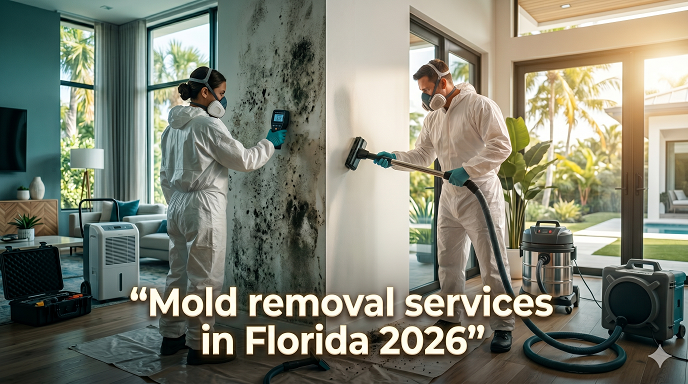
In my experience, walking into a Florida home that has been closed up with a broken AC during July is exactly like stepping into a rainforest terrarium. The air is thick, the walls feel slightly damp, and within 48 hours, a musty odor starts to take over. If you live in the Sunshine State, you already know that moisture is public enemy number one. Finding reliable mold removal services in Florida 2026 isn’t just about cleaning up a dark stain on your drywall; it’s about protecting your health, complying with state laws, and saving your property value.
What most people don’t realize is that the mold industry has shifted dramatically in recent years. Between post-hurricane surges, evolving building codes, and stricter state regulations, hiring the wrong contractor today can cost you thousands of dollars and leave you with a recurring toxic nightmare.
In this guide, I’m going to walk you through exactly what you need to know about dealing with mold this year. No fluff, no panic-mongering—just the hard truths from the front lines of property restoration.
Navigating Mold Removal Services in Florida 2026: The Legal Landscape
Florida takes indoor air quality very seriously, and for good reason. Before you hire anyone to tear out your baseboards, you need to understand how the state regulates this industry.
The 10-Square-Foot Rule
Under Florida Statutes (Chapter 468, Part XVI), anyone performing mold-related services on an area larger than 10 square feet must hold an active license issued by the Florida Department of Business and Professional Regulation (DBPR).
If a handyman tells you he can cut out a massive section of moldy drywall for a few hundred bucks, ask for his DBPR license. If he doesn’t have one, he’s breaking the law, and you are taking on massive liability. If you are a landlord and you use an unlicensed worker, you could face serious legal trouble if your tenant gets sick.
The Conflict of Interest Protection
Here is an insider secret that saves homeowners thousands: the same company cannot legally assess and remediate your home within a 12-month period.
Florida law prohibits a mold assessor from performing the remediation on a structure they tested. Conversely, a remediator cannot perform the clearance testing after their own cleanup. This is a brilliant consumer protection law. It prevents a shady contractor from “finding” a massive, fake mold problem just so they can charge you to fix it.
When you start your process, always hire independent, certified mold inspectors Florida to map the problem first. Only then should you call the remediation crew.
The Real Cost of Florida Mold Remediation in 2026
Let’s talk numbers. When panic sets in, people immediately start searching for “affordable mold removal Florida.” While I completely understand the desire to save money, cheap remediation usually means incomplete remediation. And incomplete remediation means the mold will be back in three months.
Here is a realistic look at what you can expect to pay this year.
2026 Pricing Breakdown
| Project Scope | Estimated Cost (2026) | What it Typically Includes |
| Minor Surface Mold (Under 10 sq ft) | $300 – $800 | Usually a DIY job or minor handyman repair (fixing a small under-sink leak). |
| Standard Residential Job (e.g., bathroom, single wall) | $1,500 – $3,500 | Professional containment, HEPA vacuuming, targeted demolition, antimicrobial treatment. |
| Extensive / Hidden Mold (e.g., attic, crawlspace) | $3,500 – $7,000+ | Difficult access, heavy equipment, potential structural reinforcement, moisture control systems. |
| Whole-Home / Post-Flood | $10,000 – $30,000+ | Major demolition, whole-house HVAC duct cleaning, extensive air scrubbing, long-term drying. |
Most licensed contractors base their pricing on square footage, typically ranging from $10 to $25 per square foot of the affected area.
Why Black Mold Removal Florida Costs More
If testing reveals Stachybotrys chartarum (often referred to as toxic black mold), your costs will generally increase by 15% to 25%. This isn’t a scam; it’s because black mold removal requires much stricter containment protocols. Workers must use advanced Personal Protective Equipment (PPE), higher-grade HEPA filtration, and specialized hazardous disposal methods to ensure those heavier, toxic spores do not travel into your HVAC system.
See here…………Understanding the Importance of a TH9 Farming Base
Water Damage and Mold Florida: The 48-Hour Window
You cannot discuss mold without discussing water. I always tell my clients: Mold is not the problem; mold is the symptom. Water is the problem.
Florida’s humid subtropical climate, combined with intense summer storms, creates the perfect breeding ground. Water damage and mold Florida go hand-in-hand. Whether it’s a burst pipe, an overflowing AC drain pan, or a roof leak after a squall, mold spores can germinate and grow on damp surfaces within 24 to 48 hours.
A Quick Pro-Tip for Homeowners
If you want to protect your property, buy a pinless digital moisture meter. You can find highly accurate ones online for under $40. It’s an incredibly subtle but powerful tool. After a heavy storm or a plumbing issue, press it against your drywall. If it reads high moisture levels, you can call a drying company before the mold ever grows. It is the cheapest insurance policy you will ever buy.
The Step-by-Step Florida Mold Remediation Process
When you hire a legitimate company, they don’t just walk in with spray bottles. True professionals follow the IICRC S520 standard. Here is what that looks like in practice:
Step 1: Stopping the Source
Before a single piece of drywall is cut, the moisture source must be completely eliminated. If a contractor tries to start a cleanup without confirming the roof leak is patched or the pipe is fixed, fire them.
Step 2: Containment Setup
We never want spores from a moldy bathroom traveling into your pristine bedroom. The crew will build physical barriers using heavy polyethylene sheeting. They will seal off vents and doors to isolate the affected zone.
Step 3: Establishing Negative Air Pressure
This is the hallmark of professional work. Commercial-grade air scrubbers with MERV 17 and HEPA filters are placed inside the containment zone. They pull air from the clean areas of the house into the dirty area, and exhaust the filtered air outside. This ensures that if a rogue spore goes airborne, it gets sucked into a filter, not your lungs.
Step 4: Controlled Demolition and Removal
Porous materials like drywall, carpet, and ceiling tiles cannot be “cleaned.” The mold roots deep into them. These materials are carefully cut out, bagged in heavy-duty contractor bags, sealed inside the containment area, and removed from the property.
Step 5: HEPA Vacuuming and Antimicrobial Treatment
The remaining structural elements (like wooden studs and concrete) are meticulously vacuumed with industrial HEPA vacuums. Then, professional-grade antimicrobial solutions are applied to kill any residual microscopic roots.
Step 6: Post-Remediation Verification (Clearance Testing)
After the machines have run for a few days and the area is dry, a third-party assessor comes in to conduct a residential mold inspection Florida clearance test. They take air samples to prove the spore counts inside the home are equal to or lower than the natural spore counts outside. Only then is the job done.
Common Mistakes: Please Stop Using Bleach
If I had a dollar for every time I saw a homeowner make a mold problem worse, I’d be retired on a beach in the Keys.
The most common mistake? Bleach.
Do not spray bleach on porous surfaces like drywall or wood. Bleach is mostly water. When you spray it on a wall, the chemical chlorine evaporates quickly on the surface, bleaching the color out of the mold so it looks like it disappeared. However, the water penetrates deep into the material, effectively watering the hidden roots of the mold. A week later, the mold comes back twice as aggressive.
Furthermore, scrubbing visible mold simply launches millions of invisible spores into your breathing air, contaminating the rest of your house. If you see significant mold, leave it alone, isolate the room, and call a pro.
Emergency Mold Cleanup Florida: What to Do While You Wait
If you discover a massive mold bloom and are waiting for the remediation crew to arrive, here is how you perform damage control:
- Turn off the HVAC: If the mold is near an intake vent, your air conditioner will act as a distribution system, blowing spores into every room. Shut it down.
- Isolate the room: Close the door to the affected room and stuff a towel under the gap.
- Open a window (conditionally): If it’s not pouring rain or 90% humidity outside, opening a window in the moldy room can help vent spores outdoors.
- Run a dehumidifier: If you have a standalone dehumidifier, run it in the affected room to start starving the mold of the moisture it needs to thrive.
Residential vs. Commercial Mold Remediation Florida
While the biology of mold remains the same, commercial mold remediation Florida is an entirely different beast logistically.
If you own an office building, a restaurant, or an apartment complex in Florida, mold isn’t just a property issue; it’s a severe liability. Sick Building Syndrome can lead to massive worker’s compensation claims and tenant lawsuits.
Commercial remediation requires working after hours to minimize business interruption. It often involves massive, complex HVAC systems that require specialized robotic duct-cleaning equipment. If you are a business owner, you cannot afford to hire a residential crew that is out of their depth. Ensure the company you select has specific, verifiable experience in commercial settings and carries adequate liability insurance (at least $1 million, though $2 million+ is preferred for commercial jobs).
See here…………Temporary Email for Gmail, Facebook & Instagram Signups (Safe or Not?)
Pros and Cons of Dealing with Mold Claims Through Insurance
Will your homeowner’s insurance cover this? It’s the first question everyone asks.
The Pros:
If the mold is the direct result of a “covered peril” (like a pipe that suddenly burst while you were at work), insurance will usually cover the water mitigation and the ensuing mold remediation. Having an adjuster sign off means your out-of-pocket costs are limited to your deductible.
The Cons:
Insurance companies are not your friends when it comes to mold. Most Florida policies now have strict mold caps—usually limiting payouts to $10,000. If your whole home is contaminated, you will be paying the difference.
Furthermore, insurance does not cover mold caused by neglect or gradual damage. If your roof has been leaking slowly for six months and you ignored the water stain on the ceiling, the claim will almost certainly be denied.
My advice: Always document the damage with photos and dates immediately. If you need to file a claim, consider hiring a public adjuster who works for you, not the insurance company, to ensure you get a fair payout.
A Real-World Case Study: The Hidden Leak
To put this into perspective, let me share a scenario that plays out weekly across Florida.
A family in Orlando noticed a slight musty smell in their guest bathroom but couldn’t see any mold. They bought air fresheners and ignored it. Two months later, the baseboards began to warp.
They hired an independent assessor who used a thermal imaging camera. Behind the shower wall, an incredibly slow drip from the shower valve had been leaking into the wall cavity for months. Because the bathroom backed up to the home’s air handler, the return vent had been actively sucking mold spores out of the wall cavity and distributing them through the ductwork into the entire house.
What should have been a simple $600 plumbing fix turned into an $8,500 whole-house remediation project, simply because they ignored the early warning signs.
Frequently Asked Questions (FAQs)
1. Is it safe to stay in my house during mold remediation?
It depends on the scope. For a single bathroom or bedroom, containment barriers keep the rest of the house perfectly safe. However, if the mold is in the HVAC system or covers multiple rooms, you will likely need to relocate for a few days.
2. Can I clean black mold myself?
Under Florida law, you can legally remove mold yourself if the affected area is less than 10 contiguous square feet. However, if it is toxic black mold, the health risks of DIY removal are severe. I strongly advise against it unless it is a tiny, isolated spot on hard, non-porous tile.
3. Will painting over mold kill it?
Absolutely not. Regular paint provides a food source for mold. Even “mold-killing” primers are only meant to prevent new mold on clean surfaces. Painting over active mold is like putting a band-aid on a bullet wound; it will eat right through the paint in weeks.
4. How long does the mold remediation process take?
Most residential projects take between 3 to 5 days. Day 1 is setup and demolition. Days 2-4 are for running air scrubbers and commercial dehumidifiers. Day 5 is final cleaning, teardown, and clearance testing.
5. What is the difference between mold removal and mold remediation?
These terms are often used interchangeably, but “remediation” is the accurate industry term. You can never 100% “remove” all mold spores from an indoor environment (they exist naturally everywhere). Remediation means returning the spore counts to normal, safe, natural levels.
6. Do air purifiers help with mold?
A high-quality air purifier with a true HEPA filter can help capture airborne spores and improve air quality, but it will not kill the mold growing on your walls or fix the moisture problem. It is a supplementary tool, not a solution.
Conclusion and Actionable Takeaways
Dealing with mold is stressful, but it doesn’t have to be a disaster if you handle it correctly. The key to surviving mold removal services in Florida 2026 is speed, knowledge, and hiring licensed professionals.
Remember these core rules:
- Act fast: Dry wet areas within 48 hours to prevent growth entirely.
- Fix the source: Cleanups are useless if the leak isn’t repaired.
- Verify licenses: Never let an unlicensed contractor perform mold work over 10 square feet.
- Keep them separate: Never let the same company test and treat your home.
- Ditch the bleach: Rely on professional containment and HEPA filtration, not household chemicals.
If you suspect you have an issue but aren’t sure, don’t wait for it to become a $10,000 problem. Reach out to a state-licensed, independent mold assessor to run a thorough test. It will give you the peace of mind you need, and the exact data required to tackle the problem head-on.
Entity Summary
This guide is connected to these core concepts: mold, removal, services, florida, 2026, mixed.
| Search intent | local provider shortlisting |
|---|---|
| Best next step | Compare the options, review the related guides, and verify important claims with official or qualified sources. |
| Freshness check | Recheck this topic when prices, provider terms, eligibility rules, laws, or platform features change. |
Common Questions
What should readers check before using information about Mold removal services in Florida?
Readers should compare requirements, costs, risks, eligibility, and provider terms, then verify important details with official sources or qualified professionals before making a decision.
How does Bdtechsupport make this guide useful for search and AI answers?
The guide is structured with a direct answer, clear next steps, related internal resources, and references to trustworthy sources where verification matters.
How often should Mold removal services in Florida information be reviewed?
High-impact topics should be reviewed when prices, laws, eligibility rules, provider terms, or official guidance changes, and the visible updated date should reflect meaningful edits.